




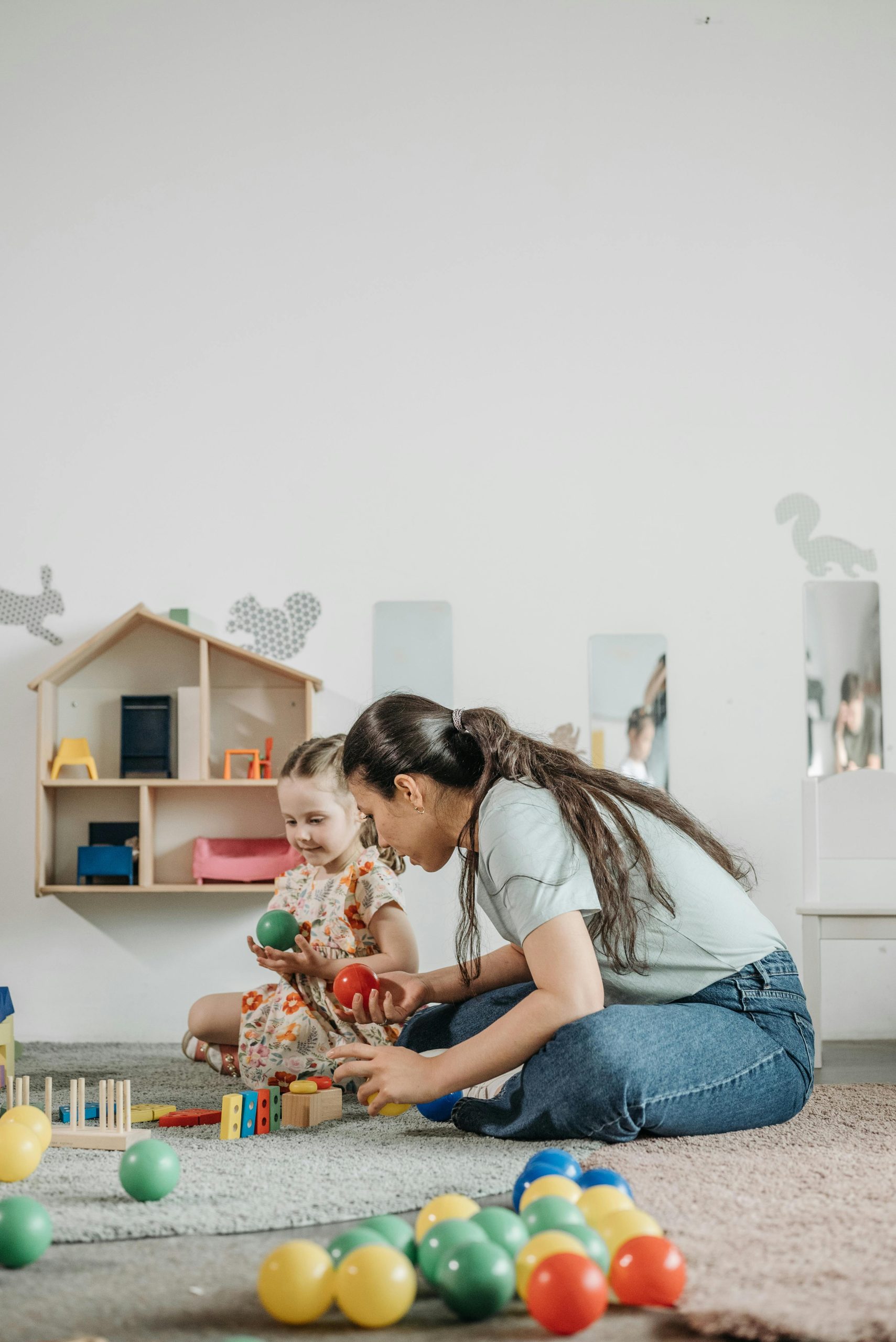
One in three toddlers spends less than ten minutes with a new toy before losing interest. The living room floor looks like a battlefield of color and plastic – yet the child sits, listless, thumbing a phone screen. It’s not about how many toys we buy. It’s about whether they meet the child where they are: curious, capable, and ready to do something real.
The foundations of child-led discovery through purposeful play
Children aren’t born needing flash or noise to pay attention. What they need is clarity, control, and the chance to master something with their own hands. Montessori-inspired materials are built around this idea: every piece has a clear purpose, a beginning, and an end. When a child completes a task – like fitting a shape into its slot or lacing a shoe – they don’t need praise to know they’ve succeeded. The design itself offers feedback. That’s the power of self-correction: it builds confidence quietly, without external validation.
Also to read : How is technology enhancing remote work experiences in the UK?
Incorporating educational materials like authentic Montessori toys allows children to navigate their curiosity without the overstimulation found in modern electronic gadgets. These tools are often made of wood or other natural materials, offering a tactile richness that plastic simply can’t match. The weight, grain, and warmth of wood create a sensory experience that grounds the child, helping them stay present and focused. For more information, please visit https://the-montessori-shop.com/.
Encouraging independent play and exploration
When a child figures out how to open a latch or stack rings by themselves, something subtle shifts. They’re not just playing – they’re proving to themselves that they can act in the world. This kind of independence isn’t forced; it grows naturally from an environment where tools are sized for small hands and designed for intuitive use. The child doesn’t need help because the toy doesn’t fight them. It waits.
Also read : How Are UK Sports Teams Embracing Sustainability?
Fine motor skills and sensory refinement
Grasping a smooth wooden knob, turning a bolt with a real wrench, feeling the resistance of a zipper – these aren’t “fun” in the cartoonish sense. But they’re deeply satisfying. They build neural pathways through repetition and precision. Over time, the child’s hands become more agile, their movements more intentional. That’s how fine motor skills grow: not from busy screens, but from real physical challenges that demand attention.
Creative play with open-ended materials
Unlike most commercial toys, which light up or make sounds on cue, Montessori materials don’t do anything for the child. A wooden block stays a block – until the child decides it’s a car, a bridge, or a spaceship. This open-endedness is key. It leaves room for imagination to fill the silence. There’s no script, no “right” way to play. Just possibility. And in that space, creativity isn’t taught – it’s discovered.
- 🛠️ Self-correction – the child learns from error without shame
- 🌳 Natural materials – wood, fabric, metal that engage multiple senses
- 🎯 Isolation of difficulty – each material teaches one skill at a time
- 🧘 Concentration through repetition – deep focus builds over time, not by force
Curating an environment for growth from infancy to school age
A well-prepared space speaks to a child before a word is said. Low shelves, accessible baskets, and a few carefully chosen materials say: “This is yours. You can do this.” For infants, it might be a mirror or a fabric bag to pull things from. For a three-year-old, it could be a bolt board or a latch board – tools that mimic real household actions.
These aren’t just “busy” activities. They’re gateways to autonomy. When a child learns to open a door mechanism or button a jacket, they’re not just practicing fine motor skills. They’re stepping into the rhythm of daily life. And that feeling – of being capable, of contributing – is a quiet kind of joy. It doesn’t shout. But it lasts.
Practical life activities for daily autonomy
Think of the things adults do without thinking: pouring water, wiping a table, sorting silverware. In Montessori environments, children are taught these tasks early – not as chores, but as meaningful work. A small pitcher with a narrow spout, a tiny sponge, a low sink – these adaptations let the child practice real skills safely. The result? Greater coordination, patience, and a sense of responsibility. It’s practical life at its core: learning by doing, not by being told.
Selecting materials based on developmental milestones
Timing matters. Introduce a puzzle too early, and frustration wins. Wait too long, and the child has already moved on. The key is matching materials to the child’s current abilities – not what they might do in six months. A one-year-old benefits from simple grasping and dropping actions. By age four, they’re ready for symbolic thinking, like naming continents or building sentences with movable letters.
Logic and spatial reasoning challenges
As children grow, their minds crave patterns and order. Puzzles like the Magnet Montessori Fraction Puzzle turn abstract ideas into tangible experiences. A child holds half a circle, then a quarter, and begins to understand parts of a whole – not from a screen, but from touch and repetition. Geography cards do the same, turning distant countries into real places with names, flags, and animals. These tools don’t replace play. They deepen it.
Language and cognitive expansion
From pointing to naming, from naming to reading – language grows in layers. Montessori books and alphabet tools support this journey by being simple, clear, and visually consistent. A three-year-old might trace sandpaper letters, feeling the shape of “S” as they hear its sound. By age five, they might build words with small tiles. The progression is gradual, but each step is deliberate. And because the child chooses when to engage, they stay motivated – not because they’re told to, but because they want to.
| 👶 Age Group | 🎯 Focus Area | 🧩 Example Materials |
|---|---|---|
| 1-2 years | Fine motor control, object permanence, sensory exploration | Ring stackers, tissue pull boxes, texture boards |
| 3-4 years | Practical life, categorization, hand-eye coordination | Bolt boards, latches, sorting trays, simple puzzles |
| 5-6 years | Abstract thinking, early literacy, spatial reasoning | Fraction puzzles, movable alphabets, geography cards, advanced busy boards |
Questions fréquentes sur Montessori toys
How do I know if a material is too challenging for my child’s current stage?
Watch for signs of repeated frustration – turning the toy over, throwing it, or walking away without trying. A healthy challenge means occasional struggle followed by persistence. If the child isn’t returning to the activity, it might be too advanced. Step back and offer something simpler; they’ll circle back when ready.
Are sustainable wooden materials becoming the new standard in modern playrooms?
There’s a growing shift toward durable, eco-friendly materials in early education. Wooden toys are valued not just for their sustainability, but for their sensory feedback and longevity. Many parents are choosing them to reduce plastic clutter and support focused, calm play – a move aligned with both environmental and developmental priorities.
Where should I start when setting up a focused play area for the first time?
Begin with a small, curated space: one low shelf, five to seven materials, and room to move. Rotate items every few weeks to maintain interest. Less is more – it reduces overwhelm and helps the child dive deeper into each activity. Start with practical life or fine motor tools, and let their choices guide what comes next.